
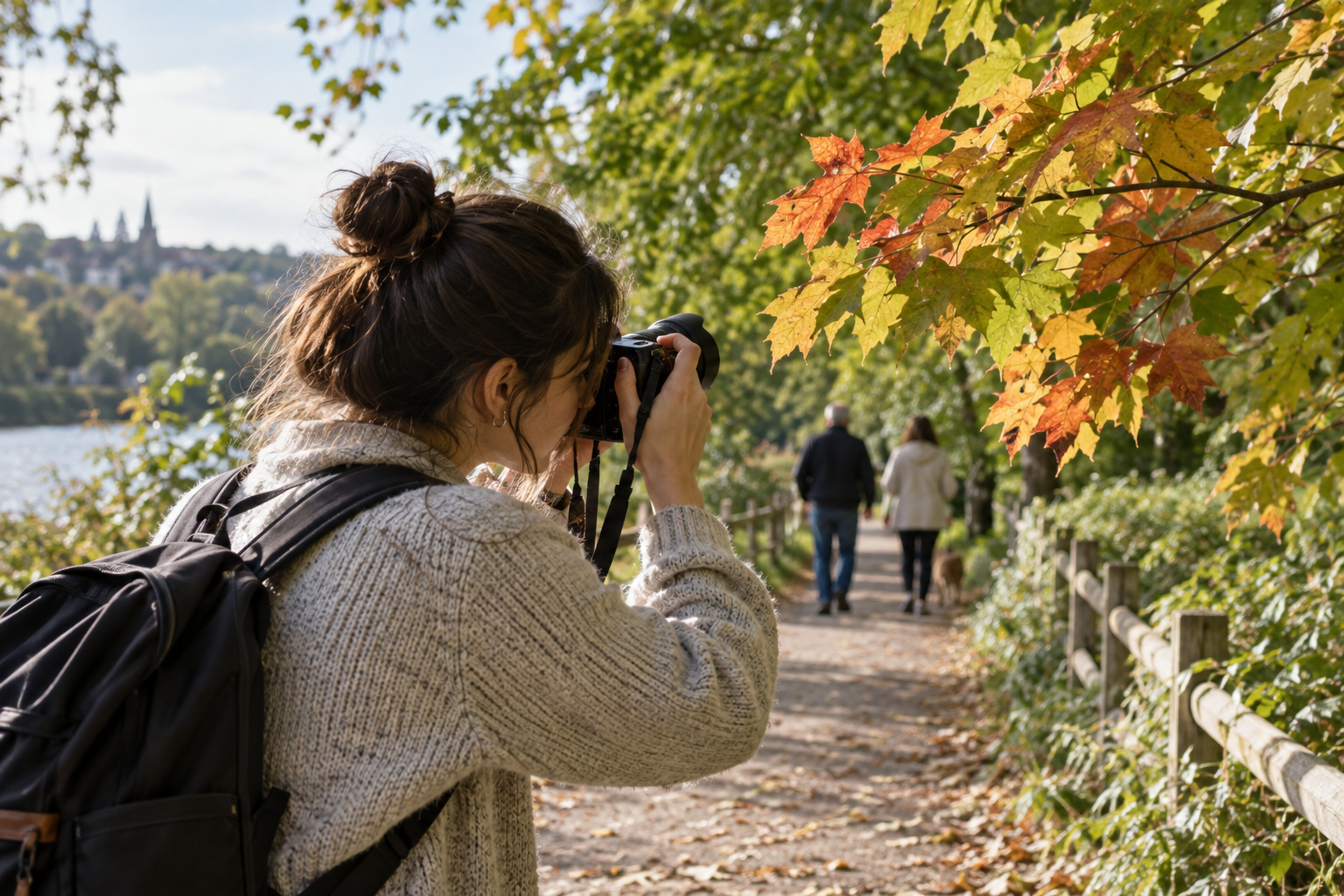
A local nature journal encourages attention to places that are easy to pass without noticing. A public path, a small garden or a familiar group of trees can provide material for repeated observations. The journal does not need to begin with expert identification. It can begin with careful descriptions, dates and questions about what changes over time.
Choose a place you can visit safely and lawfully. Follow access rules and remain on established routes where required. Observation should leave plants, animals and their surroundings undisturbed. A notebook and a camera can help record details without collecting objects or moving living things for a better view.
Give each visit useful context
Record the date, approximate time and general conditions. Note where you stood and which part of the place you observed. These details help explain why two visits looked different. A quiet morning and a busy afternoon may offer different opportunities to notice activity, even at the same location.
Describe what you can actually see. A leaf’s shape, the position of a flower or an animal’s movement can be recorded without a certain name. If identification is uncertain, mark it as a question. Later comparison with a reliable guide may help, but an uncertain label should not become a confirmed observation merely because it was written down.
Use photographs thoughtfully
Photographs can preserve features that are difficult to describe, but they are only part of the record. Add notes about size, location and details outside the frame. Use a consistent viewpoint for repeated photographs when practical. That makes changes easier to compare without suggesting that every difference has a single explanation.
Keep a respectful distance from animals and avoid approaching nests or other sensitive places. Do not rearrange plants to make a cleaner composition. When sharing photographs, consider whether a precise location could expose a vulnerable species or a private property. A general location may be enough to communicate the observation.
Look for patterns without forcing them
Review several entries together. Ask whether a change appeared once or across repeated visits. A missing sighting does not necessarily mean something has disappeared; the animal may have been out of view, or the conditions may have made it harder to notice. Keep that uncertainty visible when summarizing your notes.
Let the journal guide a small next question. You might revisit the same tree to observe new leaves, or compare one patch of ground before and after a rainy period. Record the method and avoid disturbing the place in pursuit of an answer. The value of the journal grows through repeated, considerate attention and an honest distinction between observation and interpretation.