
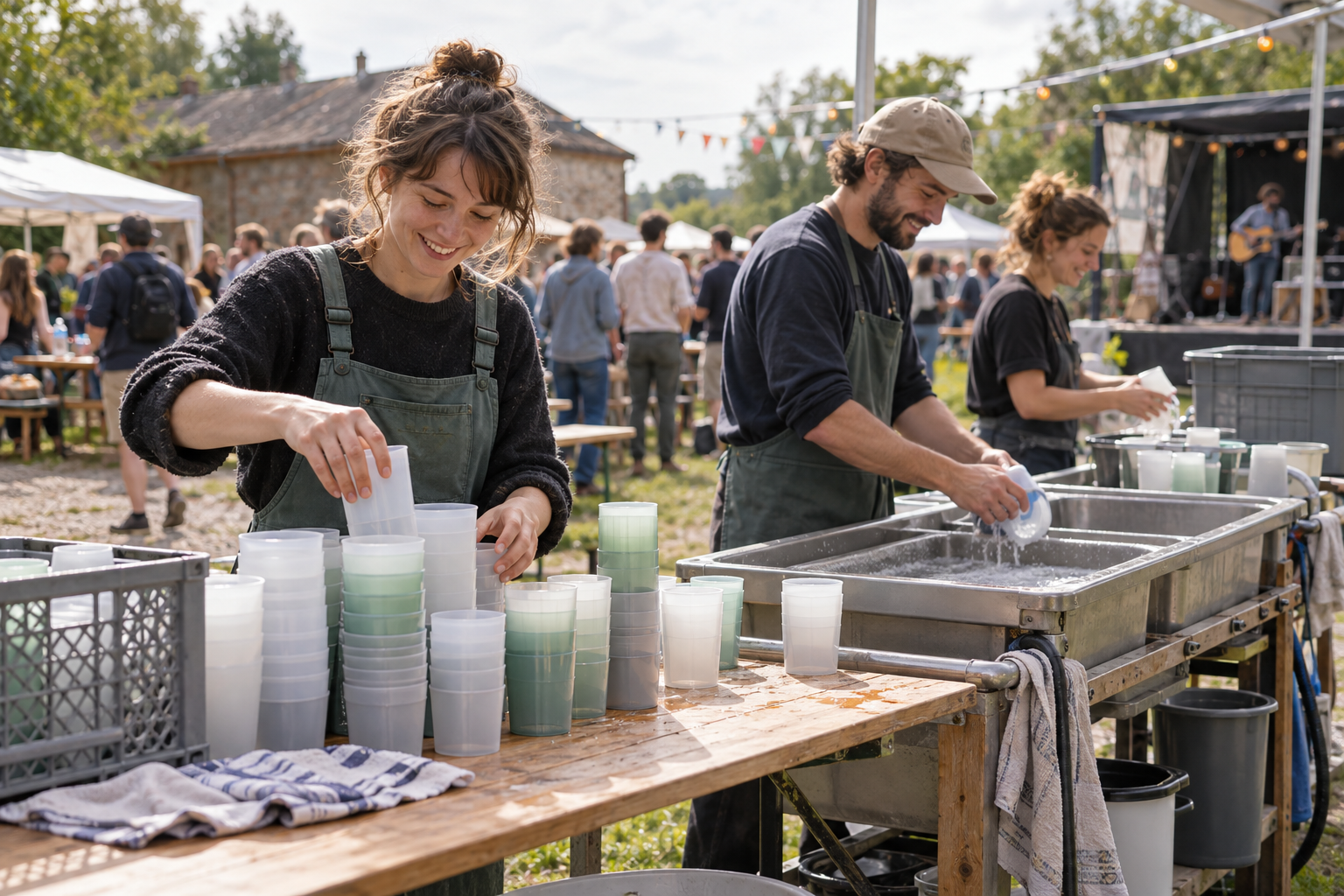
A reusable cup system depends on more than choosing a durable cup. At a community event, the cups need to reach guests, return to a collection point and pass through an appropriate washing process. Planning these steps together helps organizers see whether the system fits their venue, staffing and event schedule.
Start with the actual service pattern. Consider where drinks are prepared, where people gather and how long they stay. A small indoor gathering may use a different arrangement from an event spread across several outdoor areas. The plan should account for the movement of people and cups throughout the day, including the busiest period.
Design the collection route
Place return points where guests can see and use them conveniently. A station near an exit may help, but it should not obstruct movement. Explain which cups belong in the system and keep unrelated waste separate. Clear, short instructions are easier to follow than a dense notice attached to a crowded table.
Give volunteers a shared understanding of the process. They should know where used cups go, who moves them and where clean cups are stored. A brief walkthrough before opening can reveal a confusing handover. Assign responsibility for checking collection points so that a full container does not quietly interrupt the whole system.
Match washing to the event
Confirm that the venue has a suitable washing arrangement and follow the applicable food-service requirements. Check equipment capacity, access to water and the space needed to keep clean and used items separate. Do this before deciding how many cups can circulate. A washing bottleneck can leave a serving station waiting even when many cups exist.
Plan for the period when washing or transport is unavailable. Organizers may need enough clean cups to cover that interval, as well as time to handle the final batch after the event. Where a supplier provides cups and washing, clarify collection conditions and responsibilities in advance. The operational details matter as much as the appearance of the cup.
Record what happens and improve it
Keep a simple record of cups issued, returned and remaining, using a method volunteers can maintain. Note where guests hesitated and when a station became crowded. These observations can guide the next event without requiring a complicated monitoring system. Ask staff which part of the process demanded the most attention.
Avoid assuming that reuse automatically settles every environmental question. Materials, repeated use, transport and washing all form part of the system. A practical first goal is to operate the arrangement reliably and understand what happens to the cups. With that information, organizers can refine the workflow and make more grounded decisions about future events.