
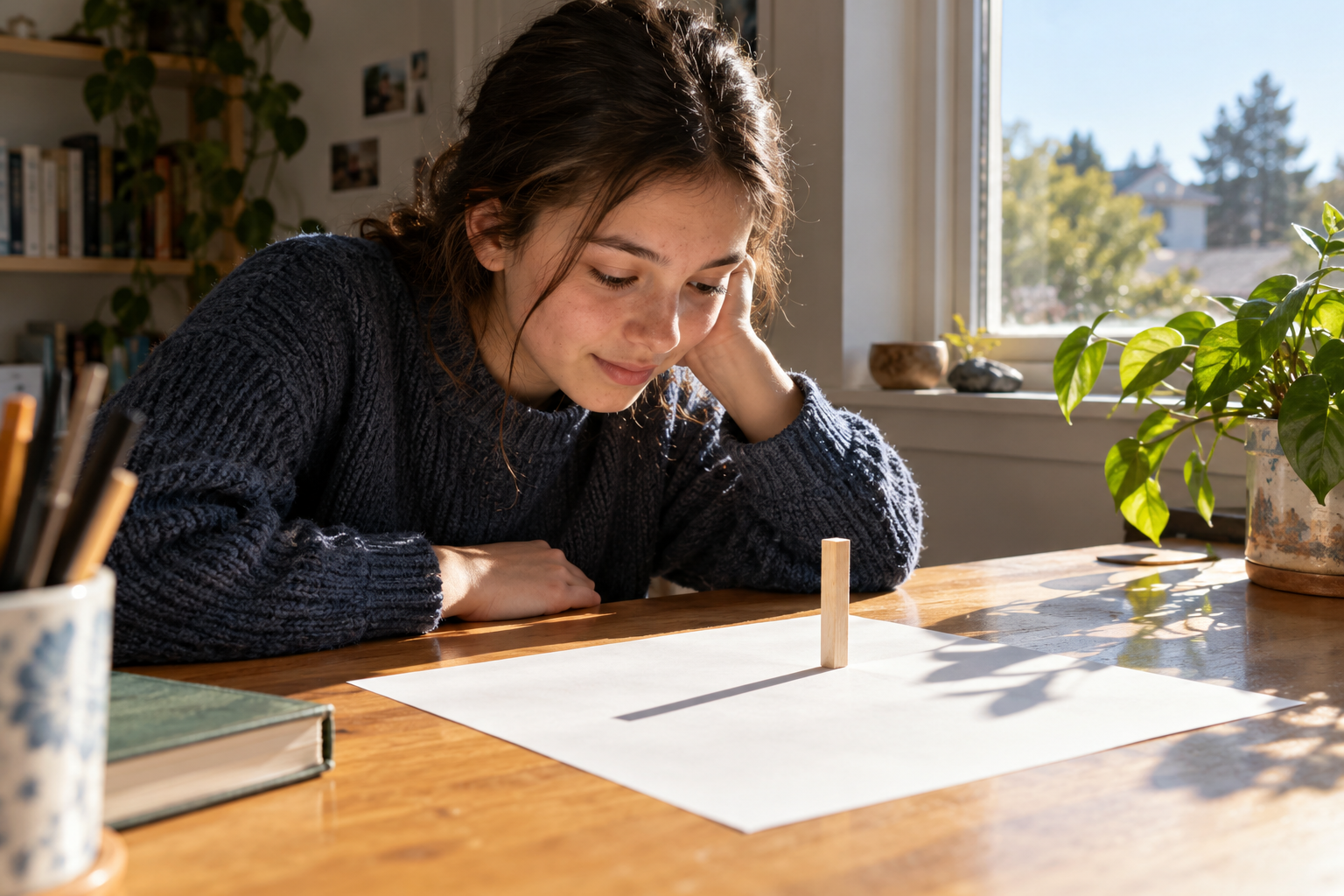
A shadow journal is a simple way to practice the habits of observation. With an ordinary upright object, a marked surface and a notebook, you can record how a shadow changes across a day. The exercise is most useful when the setup stays consistent and the notes distinguish what you measured from what you think explains it.
Choose a safe place where the object can remain still. A short wooden stick fixed upright on a stable base is easier to compare than something moved between observations. Mark the base position and the orientation of the recording surface. Do not look directly at the Sun; the shadow is enough for the exercise.
Make the observations comparable
Record the date and time, then mark the end of the shadow. Measure from the same point at the base each time, using the same units. Write down whether the edge looks sharp or blurred and whether cloud cover affected the observation. If the shadow is difficult to identify, say so instead of forcing a precise measurement.
Return at several times when practical. You do not need a perfect schedule, but the actual times must be recorded. A measurement taken late should keep its real timestamp. If the setup moves, note the change and begin a new sequence. Consistency makes the observations easier to compare without hiding interruptions.
Keep results separate from explanations
At the end of the session, arrange the measurements in time order. You may see changes in length and direction as the Sun appears in different positions in the sky. Describe the pattern in your own observations before making a general statement. One day’s record at one location is a limited example, not a complete account of every season or place.
Use a sketch to show direction and a small table for length. These two records answer different questions. A length measurement alone does not show where the shadow pointed. If you repeat the exercise on another day, check that the object, surface and measurement method match before treating the records as directly comparable.
Reflect on the limits of the method
Ask what made the observation uncertain. A tilted object, a rough surface or a cloudy interval may affect how confidently you can mark an endpoint. Write these limitations beside the measurements. Good observation includes an honest account of what the method could not establish.
The journal can also show how questions become more focused. After an initial session, you might ask whether a particular time gives a similar shadow on the next day, or how the pattern differs several weeks later. Choose one question and plan the next observation around it. A simple record becomes a useful scientific habit when its method, evidence and limitations remain visible.